

Longer journeys, repeated slowdowns, dreaded rush hours… In 2025, traffic tested the patience of drivers in Rennes. The latest traffic figures paint a picture of a metropolitan area facing increasing congestion, rising to the top of an unwelcome ranking.
Rennes at the top of an unwelcome ranking
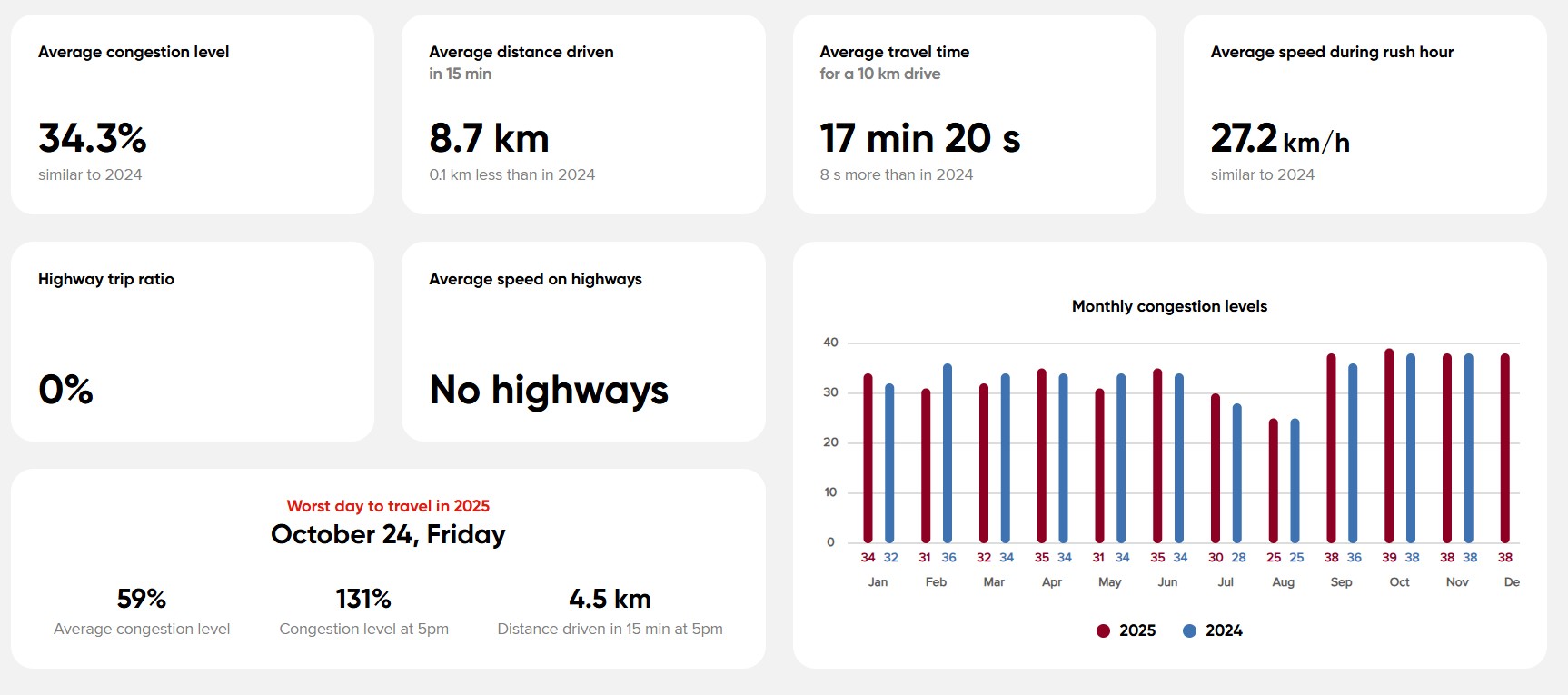
The finding put forward by TomTom is clear: with 80 hours lost in traffic jams in 2025, Rennes would have the highest total among the studied French metropolitan areas. It ranks ahead of Avignon (77 hours), Marseille (74 hours), and even Paris (70 hours). At first glance, this result may come as a surprise. Rennes doesn’t compete with Paris in population or with Marseille in size. Yet, the Breton metropolis finds itself at the top of the ranking. This paradox is partly explained by the way these data are calculated.
How are these lost hours calculated?
The data from TomTom is based on the analysis of actual travel times recorded by navigation systems. The company compares travel times during rush hours with those experienced during smooth traffic. The cumulative difference over the year provides an estimate of time lost. In other words, it doesn’t mean 80 hours spent completely stopped, but rather a collection of slowdowns. A few lost minutes each day can add up to a significant amount over an entire year.
A ring road under pressure
The configuration of the Rennes road network plays a central role. The ring road takes on a large portion of daily traffic. It serves both as a way to bypass the city and as a major route for commuting between the suburbs and employment areas. During rush hours, certain sections are regularly congested. This nearly daily congestion weighs heavily in the statistics and creates a...the impression of denser traffic than elsewhere.
In the face of these challenges, the Rennes metropolitan area is focusing on several solutions: development of public transport, a second metro line, improvement of the bus network, and the deployment of cycling infrastructure. The goal is clear: to reduce dependence on individual cars. These investments are starting to change habits, even if their effects take time to be fully measured.
More info