

Some plays move us more than others. When they talk about love, family, history, resonating directly with current events… they immediately leave a mark on our hearts and in our memories, like an unforgettable memory. It seems that Theatre de l’Œuvre has this rare talent: the ability to program memorable shows — Waiting for Bojangles had already deeply touched us earlier this year.
With The Last Cedar of Lebanon, directed by Nikola Carton, the theater in the 9th district strikes hard once again. In such a troubled international context as in the landscape of live performance, the play stands out — proof of this is that it has already made a significant impact...
acute; nominated three times for the Molières 2026. And if that recognition already sparks your curiosity, here are three more reasons not to miss this play.Voir cette publication sur Instagram
1. Hot topics in the news, tackled with accuracy and honesty
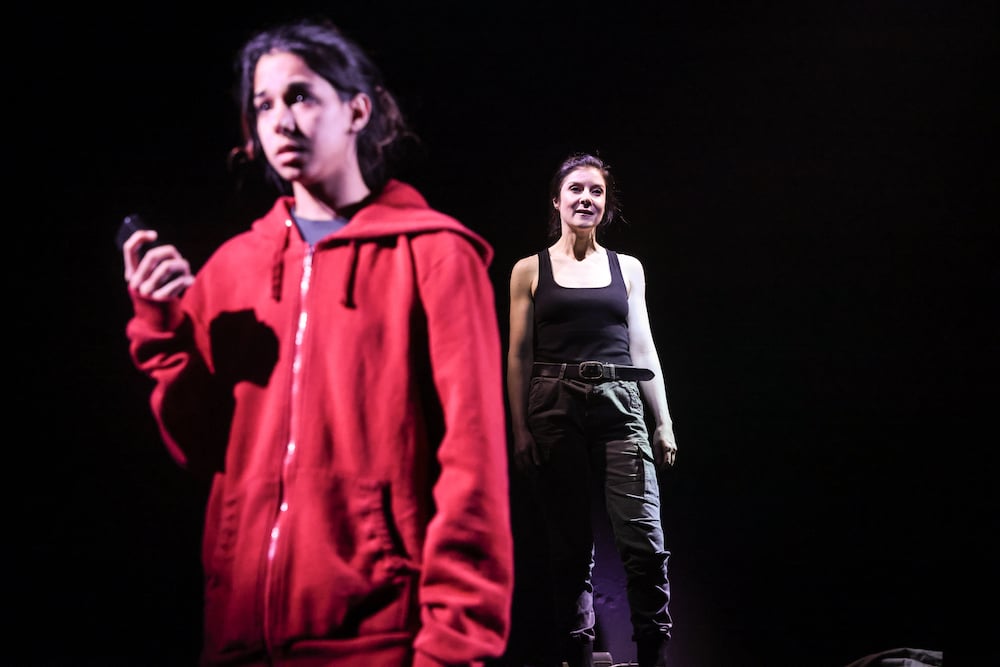
Eva was abandoned at birth. She knows nothing about her parents, but she lives with a rage, a fiery flame burning within her that she doesn’t understand the reason or source of. While she is a resident at the juvenile detention center in Mont-de-Marsan, a notary informs her that upon her death, her mother, Anna Duval, left her an inheritance: a box containing a tape recorder and tapes where she shares her life as a woman, but especially as a war photographer.
©Ruben Hazon
Through the scenes, Anna reveals herself. The audience discovers alongside her that Eva is a passionate woman, a devoted professional, a shaken lover who refuses to get too close to anyone who crosses her path. A woman who doubts her ability to be a mother, yet she will always keep her daughter in her thoughts. A free and radiant woman moving through a dark and oppressive world. Because this story is also about, with a capital H, a time when the Berlin Wall fell, when Arafat gave his speeches at the UN, when war raged in Lebanon. Echoes of the past that resonate more than ever with the current global situation.
2. A play that dares
Family, separation, war, violence… Through themes that are as complex as they are contemporary, the play showcases a rare boldness and dares to leave the audience with lingering questions. Was it the right choice to prioritize freedom over motherhood? Will Eva be able to move forward by uncovering the truth about her parents? No clear answers are provided, only avenues for reflection are opened, and this is precisely what enhances the impactful nature of the play.
Voir cette publication sur Instagram
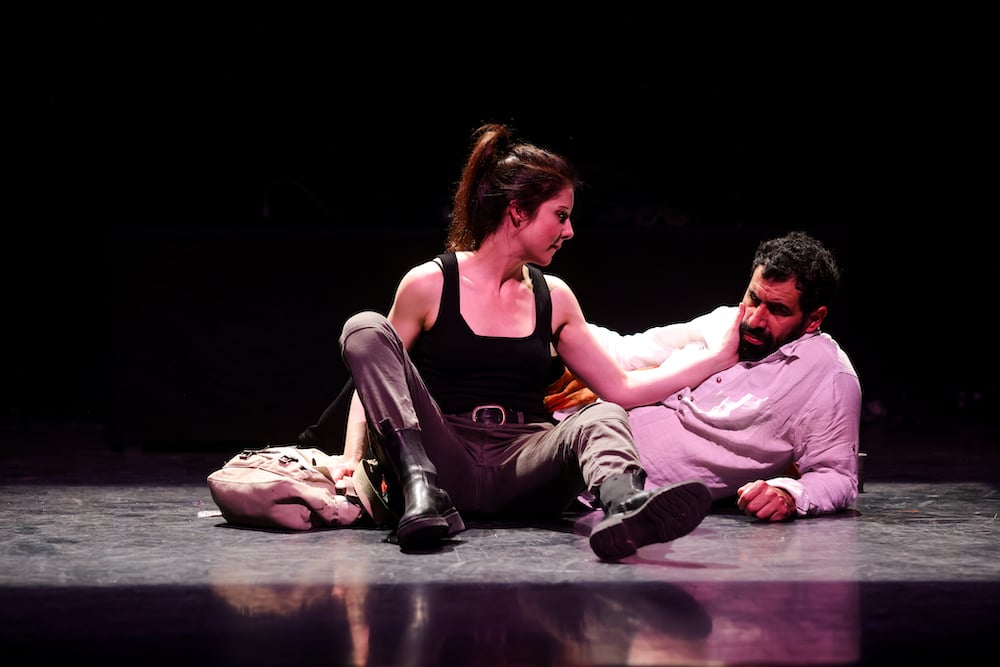
The staging also stands out. Intimate scenes with remarkable finesse and subtlety, or violent ones in a Lebanese prison at the hands of ruthless torturers, explosions of weapons, screams of terror... The ultimate joys confront the most brutal acts of humanity, with a disorienting but captivating contrast and realism.
3. Three actors, a multitude of characters
On stage, there are only three actors. Yet, the characters portrayed are so much more numerous. Maëlys Adalle (Eva) and Magali Genoud (Anna) — alternating with Pauline Bression — impress with the strength and truth of their performances.
Alongside them, AzeddInes Benamara — alternating with Fayçal Safi — delivers a breathtaking performance that almost borders on virtuosity. Notary, lovestruck teenager feeling a bit lost, fixer in a conflict zone, mentor in a youth center, Berliners celebrating the fall of the wall… He smoothly transitions from one role to another, simply changing the style of his shirt or adding an accessory. A truly captivating overall performance that, combined with the power of the narrative, ultimately convinces us: The Cedar of Lebanon is one of those plays you remember forever.
©Ruben Hazon
The Last Cedar of Lebanon
Théâtre de l’Œuvre
55, Rue de Clichy — 9th
Until July 25, 2026
More info