« Next to a vast realism, long live abstraction. I believe we must learn to do both, with the greatest love and the greatest excess possible », asserted Adya van Rees-Dutilh. Adya and Otto van Rees nurtured their lives and their work with this love and excess. Still very unknown to the public today, these two Dutch artists have nonetheless made significant contributions to the European avant-gardes of the 20th century. It is this unique couple that the Montmartre museum pays tribute to in its new exhibition, from March 20 to September 13, 2026. A particularly remarkable retrospective, as it is the very first dedicated to these two artists in France.
Voir cette publication sur Instagram
Artists free to live, free to paint
If we had to describe them in one word, it would undoubtedly be "free". Coming from high society, Adya and Otto seek to break free from social conventions very early on. Adya rejects appearances and the prestige of her status, just like her fate as a married woman, and only aspires to become an artist — a choice not well received by her family. Otto, on the other hand, yearns for the same independence as his father, who called himself a "Christ anarchist." Together, they choose a free marriage, based on love and respect.
.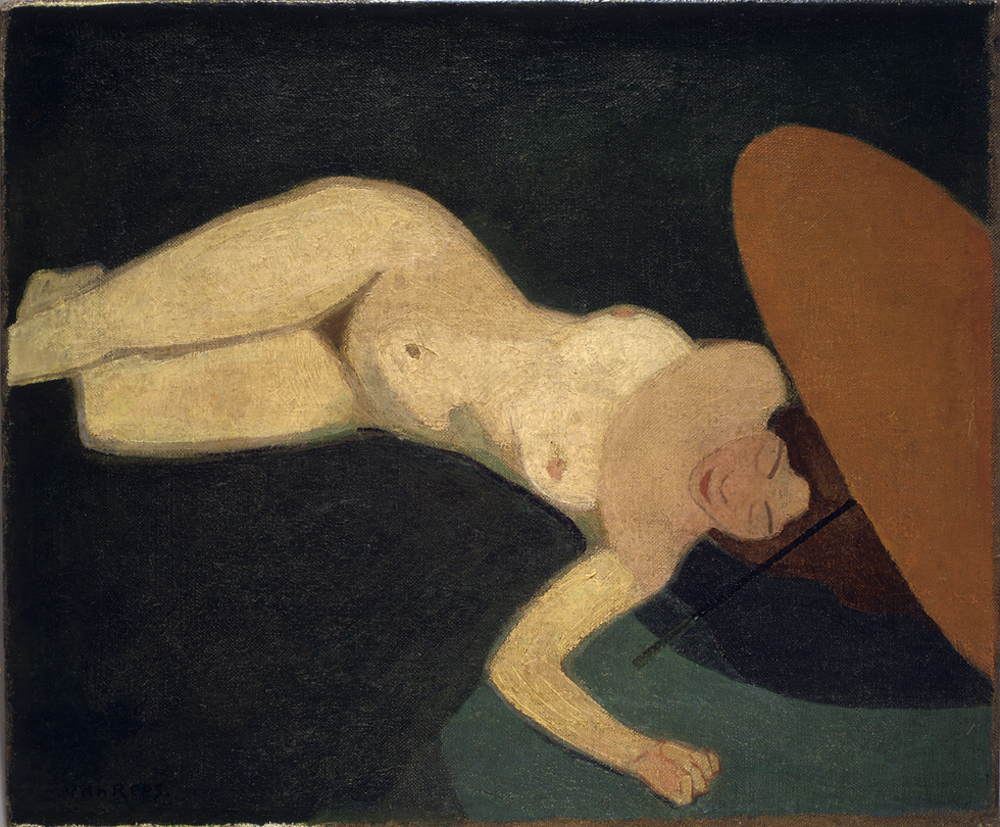
Otto van Rees, Nude Under a Parasol, 1909-1910, oil on canvas, private collection © Adagp, Paris, 2026
This quest for freedom shines brightly in their artistic practice. They never limit themselves to a single style or movement, instead exploring — neo-impressionism, cloisonnism, cubism, figuration, and more. They break free from academic constraints and experiment in art just as they do in life. Often misunderstood and sometimes even controversial, their work sparks critique. However, Adya and Otto van Rees don't seek to please: only the expression of their creativity matters.
Family at the Heart of the Creative Process
The journey, thoughtfully designed according to the chronology of their lives, offers a glimpse into their artistic evolution.Discover a total of 103 works. Each room illustrates a stage in the couple's life, as well as a new artistic exploration. In the Van Rees family, art — painting, but also collages by Otto or embroidery by Adya — is omnipresent within the family. From Paris to Zurich, through Italy and the Netherlands, the very simple daily life of the two artists unfolds through the paintings. “Ah, how we could poeticize life with so little!” Adya van Rees-Dutilh said in a letter to her daughter Magda in 1943.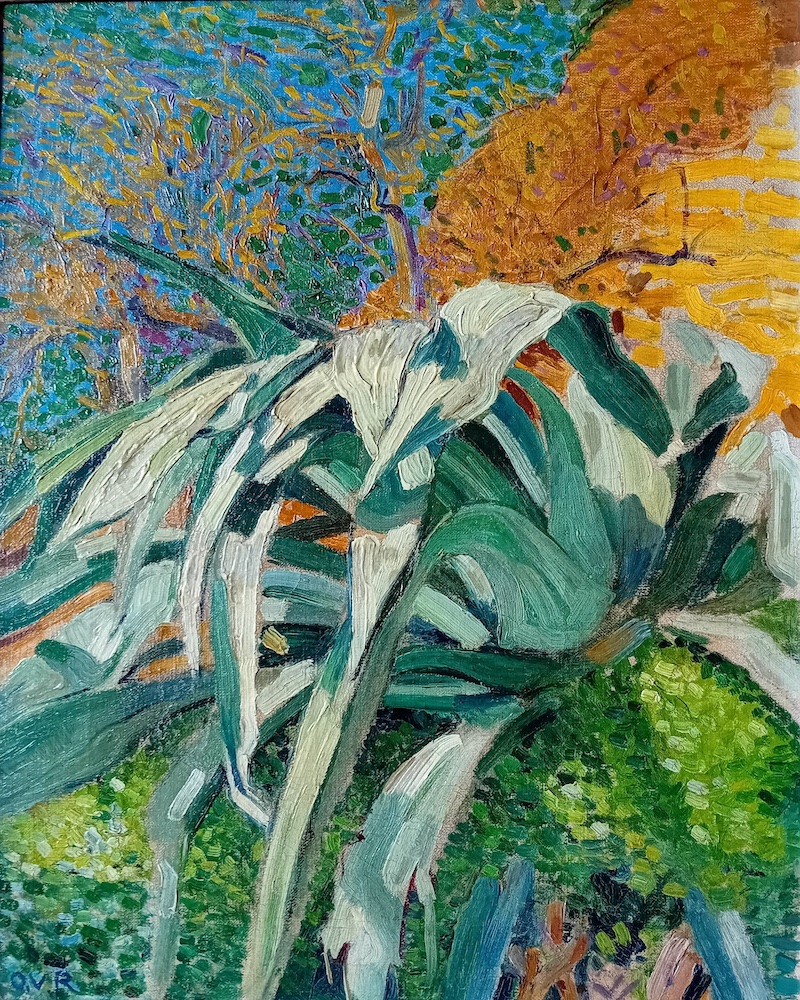
Otto van Rees, Agave, 1906, oil on canvas, Private collection © Adagp, Paris, 2026
Rewriting the history of art from a feminine perspective
Out of the hundred works presented, 73 were created by Otto and only 30 by Adya. This significant difference reflects the silence and lack of recognition that female artists endured between the 19th and 20th centuries. But in Otto's eyes, Adya is his equal: he pays tribute to her art by depicting her—not as a muse or model—but as a fully-fledged artist, as she appears "in the act" of painting or embroidering.
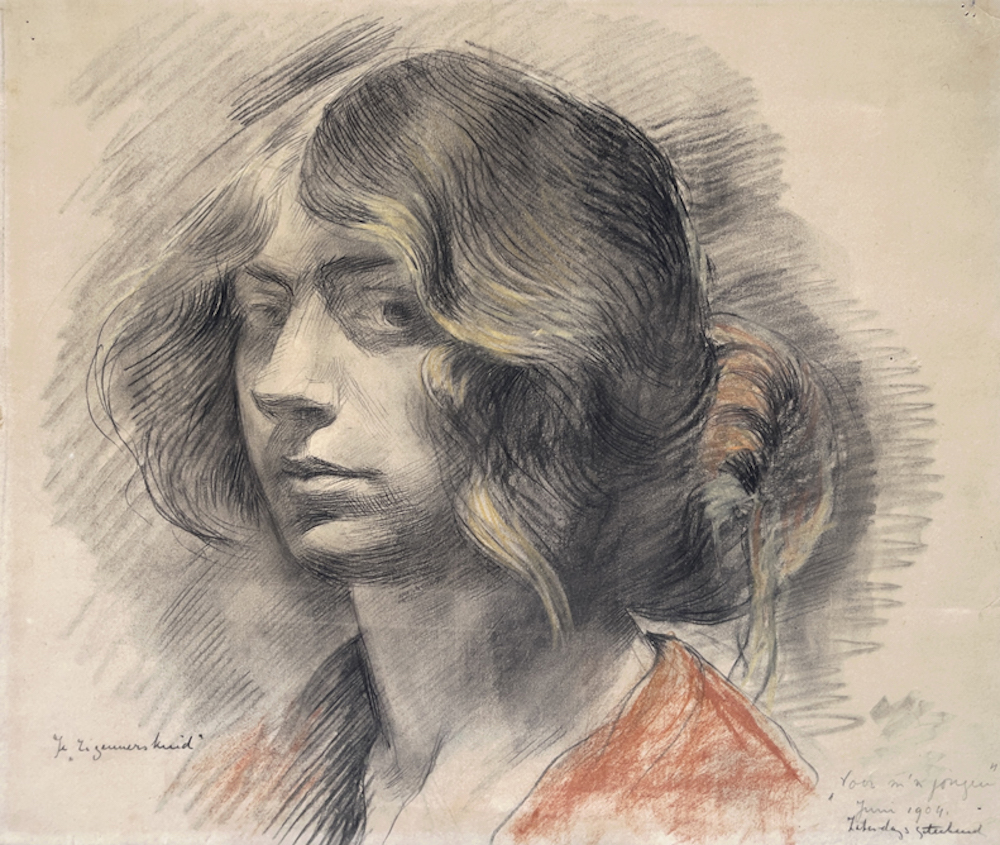
Adya van Rees-Dutilh, Self-Portrait, 1904, crayon on paper, private collection © Adagp, Paris, 2026
To rebalance this gaze and give a bigger dimension to the feminine, the Montmartre Museum dedicates the last room of the exhibition to Adya van Rees-Dutilh and finally gives her the place she deserves. A retrospective that, well beyond discovery, highlights a bold duo whose story and work invite a re-reading of art history.
Adya & Otto van Rees, At the Heart of the Avant-Gardes
Montmartre Museum
12, rue Cortot — 18th arrondissement
From March 20 to September 13, 2026
More info