

Why Is Rue du Bœuf Called That?
With its ancient cobblestones and facades steeped in history, Rue du Bœuf is one of the most charming streets in Old Town Lyon. Yet, contrary to what its name might suggest, it doesn't owe its name to an old livestock market or slaughterhouses. To understand its origins, we need to go back to the 16th century and learn about a man named Louis Thorel.
At that time, Lyon was struck by terrible plague epidemics. A renowned physician, Louis Thorel distinguished himself through his devotion to the sick, at great peril to his own life. His services to the city earned him a title of nobility at the end of the century. As tradition dictated then, he had to choose a coat of arms to represent his newfound nobility.
Voir cette publication sur Instagram
And that's when the story takes an unexpected turn. To illustrate his family name, Thorel has a bull carved in stone, at the corner of his home. The surname is indeed associated with the word "bull", derived from the Latin taurus. A heraldic wink that doesn't go unnoticed by the locals.
From bull to ox, it's just a small step!
The little sculpture, installed at number 22, quickly becomes a landmark for Lyonnaise residents. But where the owner sees a bull, the inhabitants recognize rather an ox. It's this popular interpretation that would eventually give its name to the entire street. Just goes to show that in Lyon, a sense of humor can also leave its mark in stone!
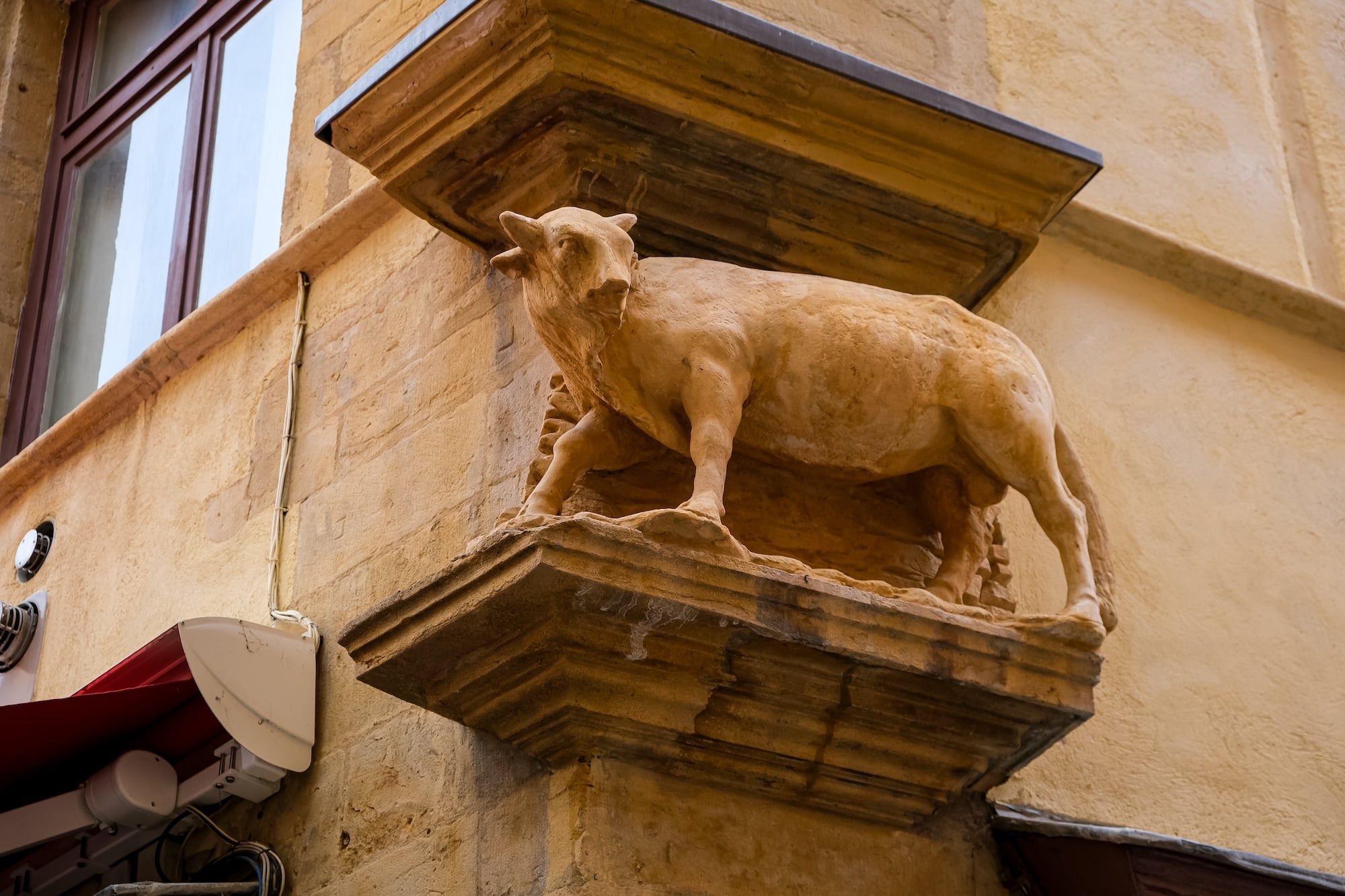
© Alla Tsyganova / Shutterstock.com
Before taking its current name, the street was called rue Tramassac. With the popularity of the sculpture, the nickname rue du Boeuf gradually became established in common usage, until it became official. The old name hasn't disappeared, however: it still designates a neighboring street, just a few steps away.
The Pink Tower and the traboules: the other treasures of the street
But rue du Boeuf is more than just its funny name. It stands as one of the most beautiful testimonies to Renaissance architecture in Old Lyon, a district listed as a UNESCO World Heritage site. Its facades from the 15th, 16th and 17th centuries tell the story of the era when Lyon's merchants and great families brought prosperity to the city.
At number 16, you can't miss the famous Pink Tower, recognizable by its ochre and pink tones. Nestled at the far end of a courtyard, this Renaissance staircase tower, with its elegant openings, is one of the most photographed monuments in the neighborhood. Another curiosity to explore: the traboule at number 27, which allows you to reach Rue Saint-Jean by passing through the buildings. These interior passages, typical of Lyon, reveal courtyards, galleries, and architectural details you wouldn't suspect from the street.
Mullioned windows, sculpted carriage doors, coat of arms and interior courtyards complete the decor. Today, restaurants, shops and craftspeople bring life to this historic street, where heritage rubs shoulders with gastronomic pleasures. The next timewhen you stroll through Old Lyon, take the time to search for the famous bovine at number 22. Behind this little statue hides a truly Lyonnais story: that of a heroic doctor, a bull turned into an ox, and a popular nickname passed down through the ages.