

The anger of the agricultural world is making its way into the heart of the metropolitan area of Lyon. Despite recent government announcements, the agricultural unions FRSEA Auvergne-Rhône-Alpes and Young Farmers AURA are calling for a large regional mobilization this Thursday. The goal: to remind everyone that promises are no longer enough and that the unease is still very real on the ground.
Two convoys, one message
Tractors will converge on strategic locations in Lyon starting in the morning. The first convoy is expected at 10:30 AM in front of the National Agency for Health Safety, on Tony-Garnier Avenue in Gerland. At the same time, a second procession will head to the Regional Directorate for the Environment, Planning, and Housing, in Brotteaux, in the 6th arrondissement. The two groups are then set to meet at the Augagneur quay, very close to the Rhône Prefecture.
Manifestation des agriculteurs |
— Préfète de région Auvergne-Rhône-Alpes et du Rhône (@prefetrhone) January 14, 2026
À l’occasion d’une manifestation régionale des agriculteurs organisée demain, plusieurs cortèges de tracteurs convergeront vers Lyon.
🔵 depuis Brignais, en passant par l’A450, la A7, la D383, puis le secteur Gerland, à partir de 9h00 ;
🟡… pic.twitter.com/GvD7QjSHLW
Mercosur, CAP, and General Frustration
Farmers are calling for a clear, coherent, and protective agricultural policy. In their statement, the unions criticize the free trade agreement with Mercosur, which they believe is incompatible with the demands placed on French producers, along with the announced budget cuts for the CAP. They also ask for a redesign of the classification of vulnerable areas and a management of wolves that better adapts to the evolving status of the species.
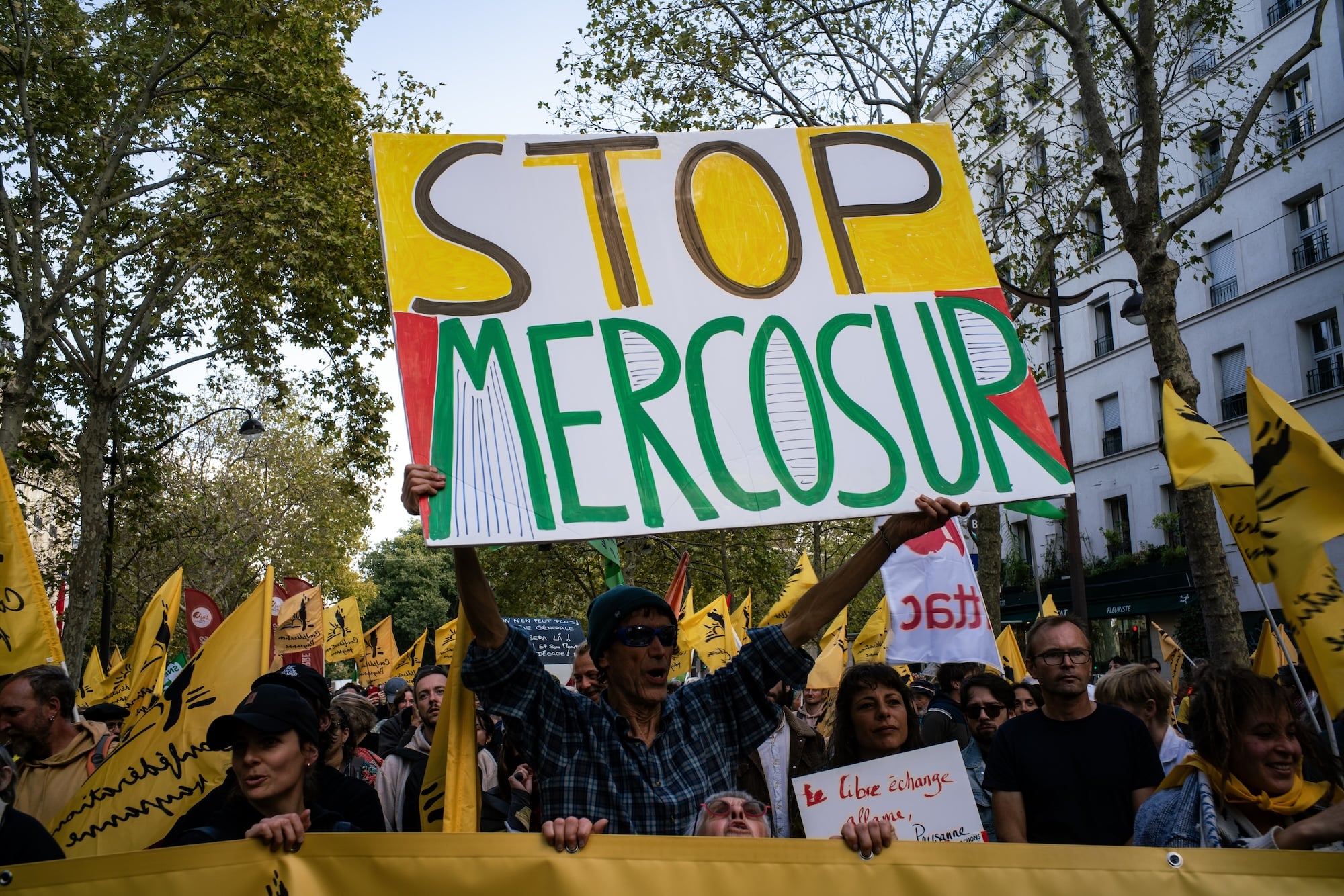
By taking to the streets of Lyon with their tractors, farmers aim to remind everyone that behind the numbers and agreements, there are farms, jobs, and an agricultural model worth defending. One thing's for sure: this Thursday, traffic in Lyon is likely to be as tense as the dialogue between the agricultural community and the State.