

This is a major breakthrough for the ancient history of Lyon! Alongside the studies launched to restore the old Jardin des Plantes, right by the amphitheater of the Trois Gaules, Radio Scoop reveals that archaeologists from the city have uncovered animal bones that are nearly 2,000 years old. It's a strategic site located at the foot of the Croix-Rousse slopes, and it’s now seen as a direct witness to the shows held during the Roman Empire.
For the first time, science confirms what history has long suspected. Until now, Lyon knew it hosted gladiator fights, but there was no material proof of animal fights, unlike in Rome. The bones that were found change everything. According to archaeozoologist Aurélien Creuzieux, seven to eight wild species likely participated in the games.
amphitheater, mixed with remains of sheep and goats.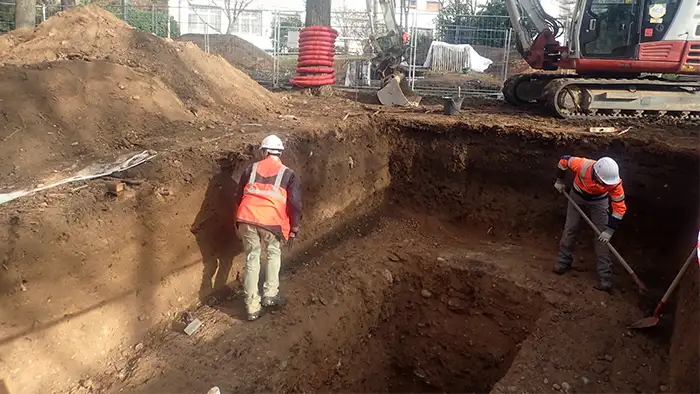
© Direction de l’Archéologie de la Ville de Lyon
When Roman Games Finally Leave Evidence in Lyon
The discovery is quite thrilling. Among the identified species are a brown bear and wild boars, suggesting spectacular hunting scenes staged for the Lyonnais audience of that time. And what about the lions? The mystery remains. The excavations continue and may still reveal surprises worthy of a Roman epic.
Beyond the games, an entire aspect of ancient life is resurfacing. Fragments of pottery, including amphorae that probably contained wine, have been uncovered. Even more touching, the discovery of the burial of a small dog, buried under a tile, shows the affection the people of Lugdunum had for their pets. Proof that even two millennia ago, love for animals was strong.
&é;jà its four-legged companions.Breathe new life into a garden rich in history
These excavations are part of a larger project to revive the site. The City of Lyon aims to restore the old Jardin des Plantes, the first botanical garden in Lyon created in 1795, before it moved to the Parc de la Tête d’Or. The goal is clear: to re-vegetate the place, restore its memory, and open it up more to the residents of the 1st arrondissement. It’s a lovely way to blend Roman history with future greenery.
Source: Radio Scoop