Forget dusty display cases: at the Ain Resistance and Deportation Museum, History is told at figurine height. Until January 2, 2027, the exhibition "Retro Life in Playmobil® from 1930 to 1950" immerses visitors in the everyday lives of French people through dozens of reconstructed scenes.
Created with Ludik'Expo, the exhibition blends Playmobil figurines, period objects, photographs and posters from departmental collections. A fun way to understand the major social, economic and cultural transformations that marked these particularly tumultuous years.
The 1930s to 1950s as if you were there
In the 1930s, a small revolution changed the lives of workers: the arrival of paid time off. Following the social movements of 1936 and the Matignon Accords, employees were granted two weeks of paid leave, accompanied by a 40-hour work week. Leisure time began to become more democratic and hobbies took on a new place in society. Radio became one of the great popular entertainments, while cinema also experienced its own revolution with the arrival of talking pictures.
The 1940s tell a completely different story, marked by restrictions and shortages linked to World War II. Rationing introduced in 1940 continues until 1949 and forces the French to completely overhaul their eating habits. The exhibition also shows how daily life evolves despite the difficulties. In kitchens, the first electrical appliances gradually appear, while at the Liberation fashion abandons the austere clothing of war to regain more sophistication, notably with Christian Dior's famous New Look.
Vintage objects that tell the story of an entire era
One of the exhibition's strengths lies in its everyday objects, sometimes very ordinary but particularly revealing about their time. 1950s swimsuit, voter cards, posters, gas pump, dishes, radio set and handbag help us understand how French people lived.
Even the tiniest details become pieces of History here. How did people shop? What could you listen to on the radio? What utensils were used for cooking? What did the first modern infrastructure look like? The different Playmobil scenes provide answers while making you want to linger over every detail.
The 1950s and the dream of modernity
After the war, France gradually entered a new era marked by reconstruction and comfort. With the help of the Marshall Plan, housing, roads, bridges and factories multiplied while cities began to be designed for a more modern society. The car became above all the symbol of this new freedom. Renault 4CV, Citroën 2CV, Peugeot 403 or even Citroëthe DS tell the story of the automobile's rise and the gradual access of working-class families to a means of transportation that had long been reserved for the wealthy.
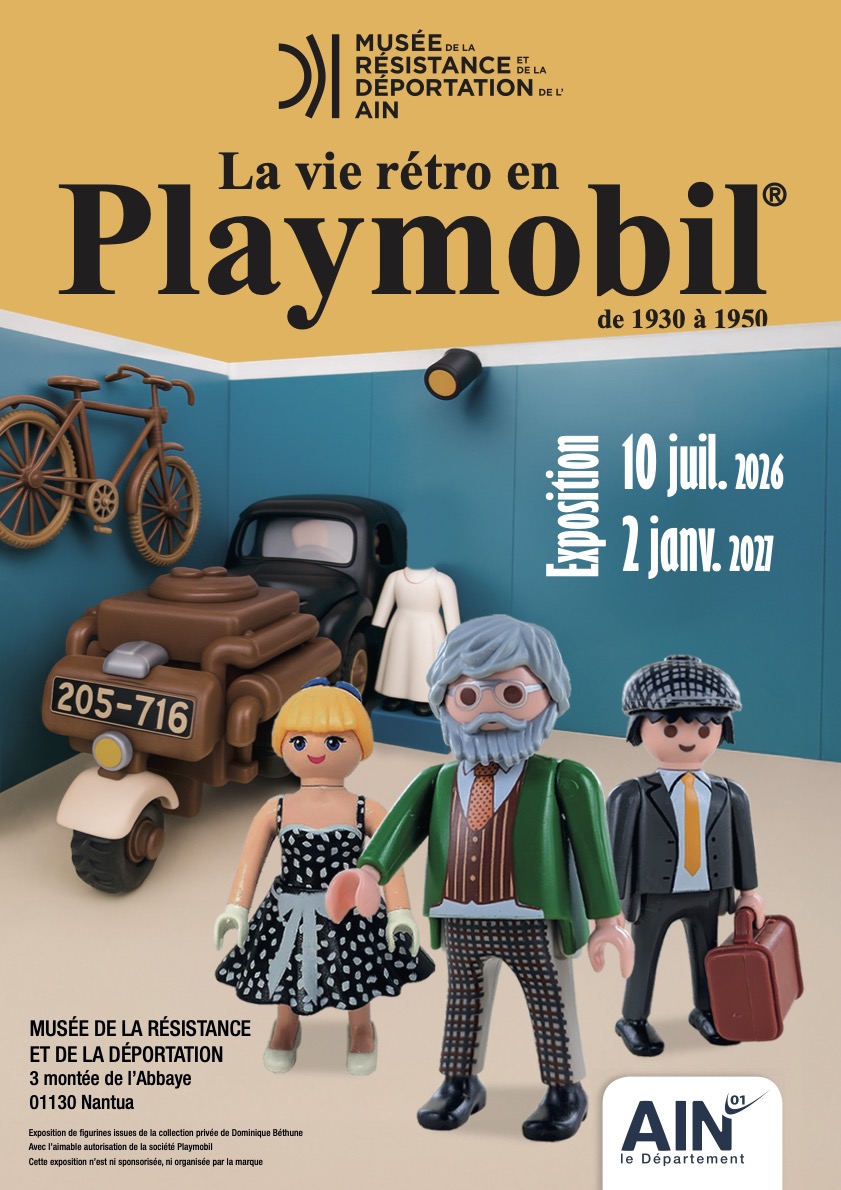
The exhibition has also been designed with younger visitors in mind, featuring a dedicated space for play and discovery. Coloring activities, scene-building, puzzle games, and free play allow children to extend their visit in their own way. Blending nostalgia, Playmobil, and genuine historical reflection, this exhibition in Nantua pulls off a neat trick: making History accessible without ever making it boring. An original outing idea in the Ain for families, and also for grown-up kids who never quite put away their figurines.
3 montée de l'Abbaye - Nantua
Daily except Tuesday from 10am to 6pm until January 2, 2027
Admission €8, free for under 18s
More info