

Just a few years ago, ordering at a restaurant was simple: an appetizer, a main dish, and a dessert. Today, you often have to choose five or six small plates to share with the whole table, hoping you won't still be hungry by the end of the meal. While some absolutely love this way of dining, others are starting to roll their eyes quite a bit. So, is it just a passing trend or a deep evolution in dining?
It All Started Far Away from Lille
Contrary to what you might think, sharing plates didn't originate in Lille's trendy bistros. The concept has its roots in Spanish tapas, Middle Eastern mezzés, and Japanese izakayas, where it’s natural to order several small dishes to share. But the real turning point came in the 2010s, in London and then the Nordic countries, before it was widely adopted in Paris. A new generation of chefs began to break the traditional meal rules: no more set menus, offering about ten small creations to order instead!
in their cravings, all in a more relaxed atmosphere, often accompanied by a glass of natural wine. Like many food trends, Lille quickly followed suit.Why is it so popular?
On paper, it’s hard not to be seduced. Sharing several plates allows for tasting more recipes, chatting at the table, extending the meal, and turning a simple dinner into a true moment of togetherness. This way of eating also fits well with the habits of those under 40, who like to snack more, enjoy discovering new flavors, and no longer necessarily follow the traditional starter-main-dessert trio. Meals become more spontaneous, more lively... and of course, very photogenic on Instagram.
Behind the friendliness, a very effective economic model
However, reducing the phenomenon to a mere trend would be a bit hasty. For several years, restaurateurs have had to deal with significant increases in costs: raw materials, energy, wages... In this context, small plates also represent a very interesting solution. With a more concise menu,ourte, the kitchens reduce waste, make it easier to use the same ingredients across multiple recipes, and refresh their menu more often. Another advantage: the average bill often rises almost without us noticing. We order a first round of plates. Then another. Then a dessert. A bottle of wine. A cocktail... The restaurant becomes not just a place to eat, but also a spot to spend the evening. For many establishments, this is now a more flexible and profitable model.
Why are some starting to feel saturated?
Over the past year or so, criticisms have been on the rise, even in gourmet publications. The main complaint is almost always the same: we never know how much to order. As a result, we sometimes leave still a bit hungry, or with a bill that far exceeds what we expected. Because behind plates priced at 12, 14, or 16 euros, the bill can climb quickly. Seven small plates, a few drinks, and a dessert can easily surpass the cost of a more traditional meal.
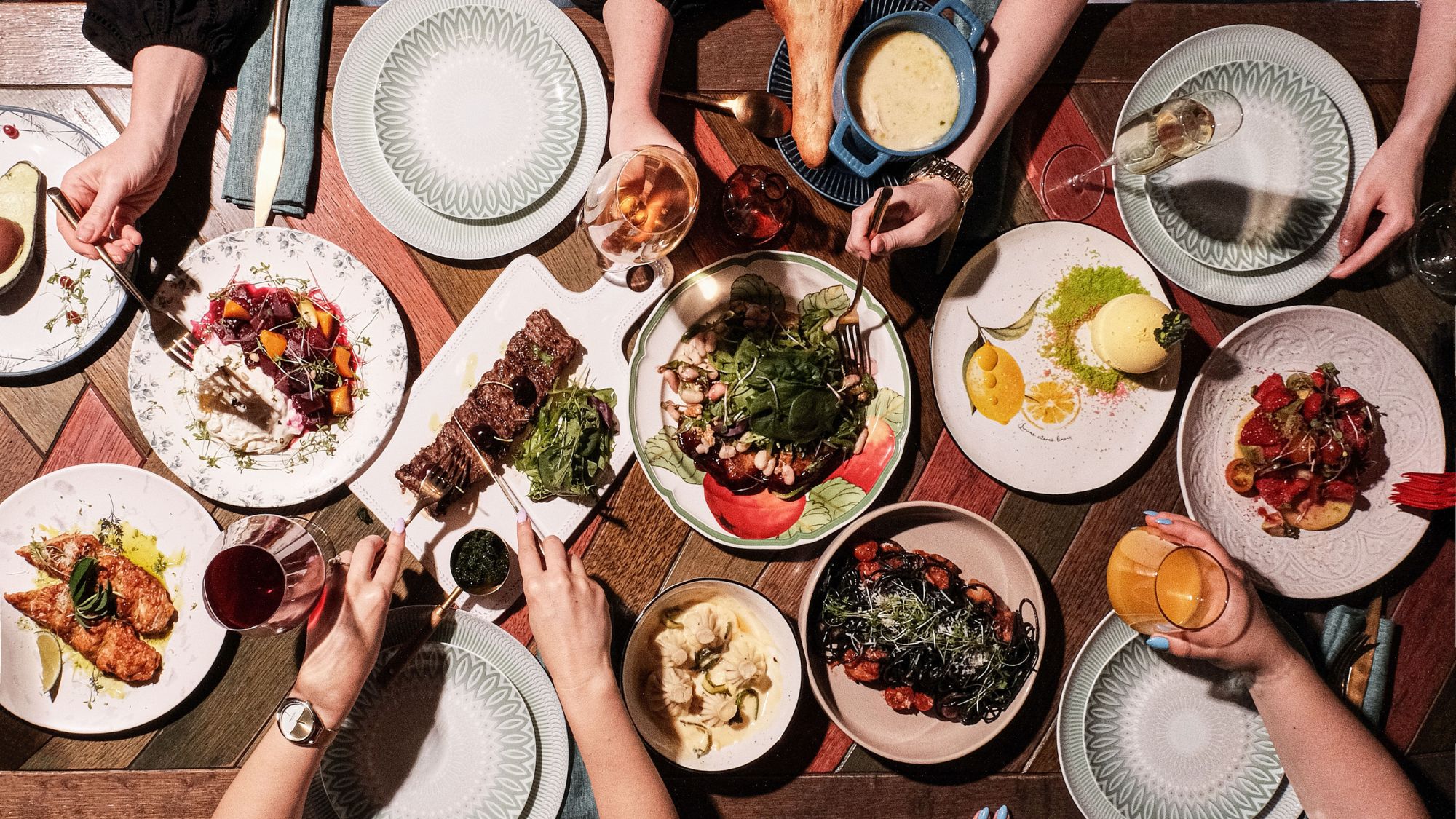
Another common frustration mentioned is the staggered arrival of dishes. Some people love this pace, while others wish they could just enjoy a hot meal at the same time as their friends. Many also feel that new places all end up looking the same. Open kitchens, candles, handmade dishes, local products, natural wine, indie playlists... and of course, small plates to share. When a concept is replicated everywhere, it can sometimes lose a bit of its freshness.
In Lille, a trend that follows the evolution of dining
Coffee shops, food cellars, neobistros... Lille often trails behind the major Parisian trends by a few years. The small plates to share fit into this same evolution. They cater to new customer expectations as well as the new economic constraints faced by restaurateurs. The success is such that...
many addresses that have opened in recent years have adopted this format, which has become almost a standard in certain neighborhoods.A trend... that ultimately raises a real question
The paradox is quite amusing. Small plates were supposed to make dining out more relaxed, simpler, and friendlier. Today, some customers complain about the exact opposite: having to calculate how much to order, keep an eye on the bill, or no longer find a genuine dish on the menu. As often happens in the restaurant industry, when a concept works very well, it ends up being copied everywhere. And that's perhaps where the weariness begins. So, are shared plates a brilliant idea or are they starting to go in circles? One thing is for sure: the debate is well and truly underway.
Sources: Le Monde, Sharing plates, the art of eating together without being too greedy (January 8, 2024) / Horeca Magazine, The revolution of small plates (April 16, 2025) / La Tribune, The success of concept restaurants pushes traditional dining to reinvent itself (2025) / ProSaveurs Study 2024-2025 / Robin Panfili, Is the dictatorship of small plates finally over?