

In Mérignac, a bicycle priority experiment on a roundabout is bearing fruit. Conducted in partnership with Cerema, it aimed to evaluate a new way of sharing the road and to secure active modes of transport on a roundabout that was particularly unfriendly to cyclists. For several months, camera observations, counts, and user surveys have allowed us to measure the effectiveness of the system.
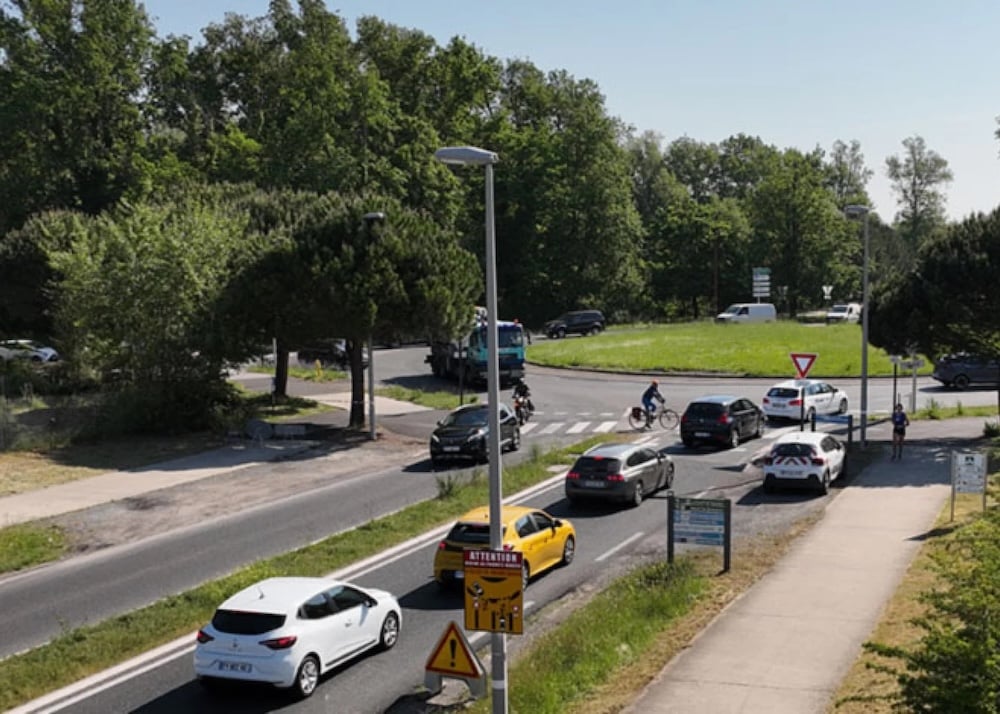
A new hierarchy of mobility tested in real life
The project is part of the Metropolitan Bicycle Plan. On this strategic roundabout, Bordeaux Métropole has implemented a cyclist priority allowing bikes to continue their path without stopping at the entrance or exit of the roundabout. The system mainly relies on signage: advance signs, yield for drivers, and road markings. The intervention, at a very modest cost, has not changed the geometry of the roundabout to ensure a test that truly reflects real conditions.
Positive results for cyclists… without degrading traffic
Cerema highlights several lessons: drivers are giving more priority to cyclists, and the sense of security for bike users has increased...
no noticeable degradation in motorized traffic has been observed. Fluidity, speed, overall dynamics: traffic remains stable.Users surveyed confirm this trend. Signage is generally well recognized - even though it could be enhanced - and three-quarters of respondents would like to see this arrangement replicated elsewhere.
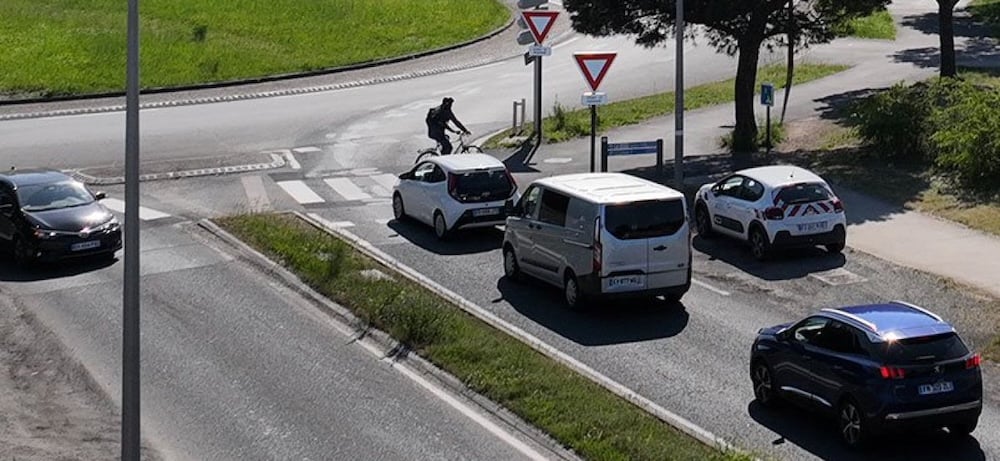
A first Girondine set to expand on the Express Bike Network
With these results in hand, Bordeaux Metropolis is making bike priority permanent at this roundabout and plans to improve the clarity of the signage. This setup could be rolled out at other roundabouts of the future Express Bike Network, as long as their geometry supports it.
The Mendes experiment is becoming a model case for the metropolis, which continues its transformation into a cycling-friendly city through a series of actions: express bus lines, tram interconnections, the scaling up of the metropolitan RER, and a constant rise in cycling activity (with up to 4,000 daily crossings on some routes). A symbolic step that confirms that prioritizing sustainable mobility can transform habits and practices.
even on the most complex infrastructures.